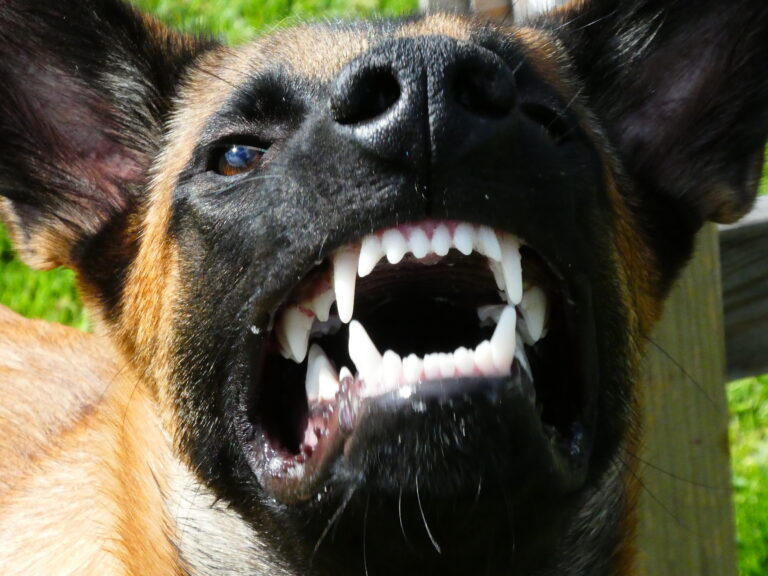
A dog is not a label
A dog is not a label
Dott. Vito Branco, DVM, read the essay «We believe we are measuring what we are only interpreting» by Tanino Gaetano Chiavaro before publication, commented on it from a scientific point of view and gave his approval. He wrote the following personal reflection on it.
By Dott. Vito Branco, DVM

My friend Tanino Gaetano Chiavaro’s essay addresses a question that I consider fundamental in the dog world and that, for anyone working in veterinary medicine, breeding and selection, deserves particular attention. How much do we really know about a dog’s behaviour, and how much of our judgement arises instead from the interpretation of what we observe?
It is a question worth dwelling on, because it confronts us with the limits of our knowledge and with the responsibility we bear every time we assess an animal.
In the course of my professional experience I have seen how easy it is to turn an observed behaviour into a permanent characteristic of the individual. A hesitation becomes insecurity, a defensive reaction is labelled aggression, a lack of response is interpreted as inability. Yet behind these manifestations there may be physiological conditions, pain, fatigue, previous experiences, emotional states or different ways of processing stimuli.
Before attributing a meaning to a behaviour, we should therefore try to understand the conditions in which it appeared. This principle belongs to clinical medicine as much as to the study of animal behaviour.
In veterinary practice we know well that no parameter should be interpreted in isolation. A rise in heart rate, a change in cortisol concentration or an altered blood value only take on meaning when they are considered within the animal’s overall physiological and clinical picture. I do not see why we should adopt a different standard when we assess a dog’s behaviour, attributing to a single response the value of a stable trait of its temperament.
Another aspect I wish to dwell on concerns genetics and selection, subjects to which I am particularly attached, also through my experience in breeding.
We know that many behavioural traits have a hereditary component, sometimes a considerable one. This does not mean, however, that their expression is genetically predetermined. Heritability expresses the proportion of the variability of a trait, observed in a given population and under the conditions studied, that can be attributed to genetic differences between individuals. It does not tell us what percentage of an individual dog’s behaviour depends on its genes.
This is an essential distinction, and one that is far too often overlooked.
The genetic make-up helps to define individual predispositions, but their development and expression also depend on the environment, on learning, on experience and on the conditions in which the animal grows up and lives.
And it is precisely here, in my view, that one of the breeder’s greatest responsibilities lies.
Selecting does not mean simply choosing the animals that achieve the best scores in a trial. It means knowing the functional characteristics we intend to preserve, assessing their stability, understanding as far as possible their hereditary component, and distinguishing individual aptitudes from performances acquired through training.
Otherwise we risk steering selection towards dogs that are ever more capable of passing certain trials, without knowing how far those performances actually represent the qualities needed in real work.
It is a risk on which the dog world, especially where utility and working breeds are concerned, should reflect more carefully.
This does not mean, of course, denying the usefulness of behavioural assessments. Tests remain important tools and, when designed and used correctly, can provide valuable information. But we need to know their reliability, their validity and above all the limits of their predictive power.
A test can produce repeatable results without necessarily measuring what we intend to assess. And even when it correctly measures a particular behavioural response, we cannot take for granted that the same response will appear under different conditions.
The reliability of a measurement, the validity of the conclusions we draw from it and the ability to predict future behaviour are distinct matters. To confuse them is to give results a value they may not have.
The consequences of such an error can be anything but negligible. Think of breeding decisions, the exclusion of an animal from selection, training paths, judgements of suitability and, in the most delicate cases, decisions that may compromise a dog’s welfare and future.
It is above all for this reason that I consider Chiavaro’s reflection important. In his work I recognise an invitation to assess with greater caution, not to confuse experience with infallibility, and to remember that even a judgement made by a competent professional must be open to discussion and verification.
Experience is an extraordinary resource, but on its own it is not enough. It must be constantly measured against the scientific method, just as a numerical result cannot replace knowledge of the animal and of the circumstances in which it was obtained.
For my part, the years spent studying, observing and working with dogs have taught me that the most immediate answer is not always the most correct one. Sometimes it is necessary to observe again, compare different situations, revise a first impression and admit that the available evidence does not allow a definitive conclusion.
I do not regard this caution as a sign of professional uncertainty. Rather, I regard it as a form of responsibility.
A dog is not the result of a trial, a score or a character label. It is a biologically complex individual in which genetic make-up, physiology, environment and experience interact throughout its life.
That is why I believe our responsibility is not to make ever more categorical judgements, but to learn to make ever better-founded assessments, aware of what we can demonstrate and of what remains only a hypothesis.
Observing a behaviour is one thing. Understanding its meaning, identifying its possible causes and predicting its expression in different circumstances is a far more complex task.
It requires knowledge, experience, scientific rigour and also a certain intellectual humility, the kind that allows us to recognise our limits without giving up the search for answers.
Because, ultimately, the respect we owe a dog also begins here: with the ability to understand it for what it actually shows, without claiming that every one of our judgements is a definitive truth.
Veterinarian. Specialisations (Italy): infectious diseases, prophylaxis and veterinary public health; animal nutrition; animal breeding and genetic improvement
Translated from the Italian. The Italian original is authoritative.